
Introduction
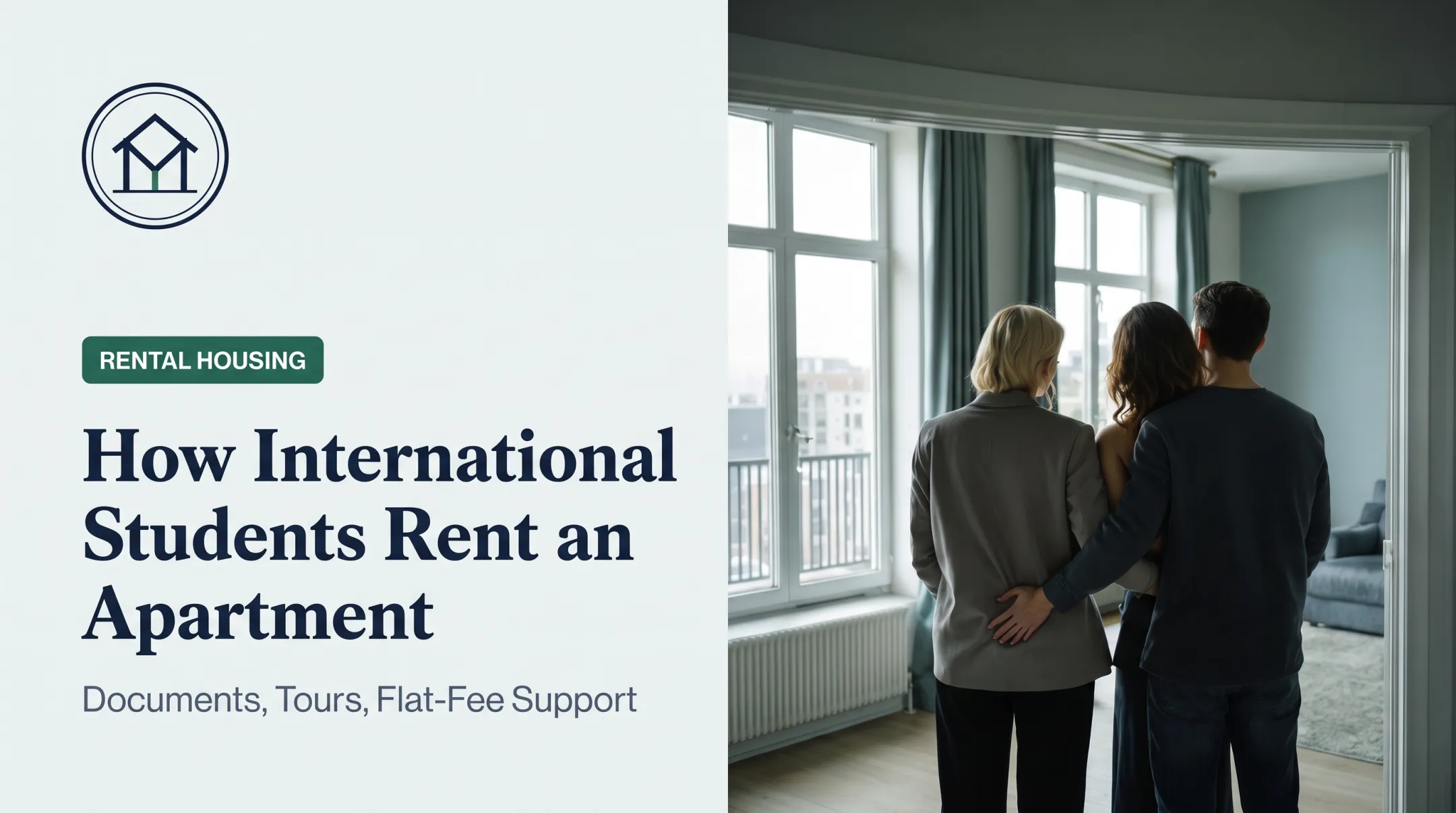
Searching for a U.S. apartment from another continent is harder than it looks. You can't walk through the unit, rental customs differ from your home country, and many landlords expect a Social Security number or U.S. credit history you don't have.
Scams add to the stress. The FTC logged nearly 65,000 rental-scam reports and about $65 million in losses between January 2020 and June 2025, according to FTC data.
This guide compares on-campus and off-campus options, shows how to build a realistic budget and document package, explains how to vet listings safely, and helps you plan for the day you land.
Key Takeaways
- Start with your university's housing and international student offices, then compare other options.
- Budget for deposits, utilities, internet, furnishings and insurance, not just rent.
- Ask landlords how they treat applicants with no U.S. credit history, SSN or guarantor before paying any fee.
- Verify the property, read the lease, and pay only by traceable methods.
Housing Options for International Students in the U.S.
Each housing category trades off privacy, cost, flexibility, convenience and responsibility. On-campus housing is the simplest path, while off-campus options give you more control and more paperwork.
On average, public four-year institutions reported $12,069 for on-campus room and board versus $12,582 off campus in 2023-24, per NCES data. Those are unweighted institutional averages covering different groups of schools, so treat them as a rough guide only.
On-campus housing
Dorms, residence halls and university apartments put you close to class and campus support. Rooms are often furnished, and many contracts bundle meal plans or utilities. Berkeley's 2026-27 residence-hall contracts, for example, include meal plans.
Confirm these points before you rely on a campus offer:
- Deadlines. Minnesota's first-year guarantee requires an application and payment (or extension) by May 15, plus orientation registration.
- Priority is not a guarantee. UCSB gives regularly admitted first-year international students priority if they meet deadlines. Bellevue College allocates apartment-style units first-come, first-served.
- Break closures. Most Berkeley halls close from December 19 to January 14.
- Guest rules. Western Washington caps guests at 3 consecutive nights and 7 per quarter.
Off-campus private and shared housing
Private apartments, shared houses, room rentals and purpose-built student housing offer more privacy and flexible arrangements. You also take on the lease, utilities, furniture, commuting and maintenance.
Purpose-built student housing can reduce setup work. Coppin State points students to one complex with furnished units, per-bed leases and roommate matching, but notes it doesn't own, inspect or endorse listed properties. A listing on a university page is not an inspection.
Homestays and temporary accommodation
A homestay, short-term rental or university guest room works when you want local support or need time to tour permanent housing in person. UIC offers guest accommodation but requires booking before arrival and has limited space. Bellevue asks students to apply for a homestay through its agent at least two months ahead.
Before you commit, confirm:
- Total cost and what it covers (meals, utilities)
- Transportation expectations and house rules
- Cancellation terms
- How the provider verifies hosts or properties

How to Search for Student Housing Before You Arrive
Begin with the university housing office, the international student office and your admitted-student portal. Use third-party sites and social media groups only after that.
Define a housing brief before browsing
Write down your non-negotiables:
- Maximum total monthly cost
- Commute or campus-distance limit
- Private or shared space
- Furnished or unfurnished
- Roommate preferences
- Lease length
- Accessibility needs
- Guest expectations
Research neighborhoods and commute options
Compare each area on the basics that affect daily life:
- Distance to campus
- Transit and walking routes
- Groceries, healthcare and laundry
Check the commute at the hours you will actually travel, such as an 8 a.m. class or a late library night.
Build and verify a shortlist
Track each option in a spreadsheet:
- Address, rent and deposit
- Utilities, furnishings and fees
- Landlord details and lease dates
- Application status and open questions
Seeing options side by side exposes hidden costs fast.
Arrange a reliable remote viewing
Request a live video tour or ask a trusted person to visit. Confirm the address, unit, building condition and surroundings match the listing. The FTC warns that even a video tour doesn't guarantee a property is real or available, so pair it with ownership checks.
Contact the landlord or housing provider carefully
Ask about:
- Maintenance response times
- Internet and utility arrangements
- Parking availability
- Roommate arrangements
- Renewal terms and move-in procedures
- Application requirements
- Whether the person is authorized to rent the property
Preparing Your Budget, Documents, and Lease
Advertised rent is only part of the cost. Calculate monthly expenses and the cash you need before move-in.
Calculate the full cost of housing
- Rent and deposit. California generally caps deposits at one month's rent (small landlords may charge two); New York caps them at one month.
- Application or screening fees. New York caps screening charges at $20, while Massachusetts bars application fees. Rules vary by state.
- Utilities. The EIA reports a $142.26 average monthly U.S. residential electricity bill for 2024. Add water, gas, trash and internet.
- Renters insurance. The industry average premium was about $171 per year in 2022.
- Extras. Furnishings, laundry, parking, transportation and temporary lodging if your lease starts late.

Prepare for U.S. rental screening
Landlords may ask for:
- ID, proof of enrollment, proof of income or funds, and references
- An SSN or credit history
- A guarantor who takes on financial responsibility for the lease
CSU Fullerton lists passports, visas, sometimes an I-20, bank statements and scholarship letters as common alternatives, and notes that SSNs or ITINs are not always required. No single document set works everywhere, so ask each landlord what they accept.
Review the lease before signing
Check these items line by line:
- Start and end dates, renewal and early termination notice
- Subletting, occupancy limits and guest rules
- Deposit, late fees and rent due dates
- Utilities, maintenance responsibilities and included furniture
- Joint-and-several liability for damages or utilities
- Dispute procedures
Check school and immigration requirements
Ask your university's international office whether you need proof of accommodation. F and M students must report address changes to their designated school official within 10 days of moving, per SEVP guidance. Some schools accept a temporary address at check-in.
Get clarification before paying
Request written explanations of unclear clauses. Housing office staff, international student services or a qualified attorney can help before you sign an unfamiliar agreement.
How to Check That a Rental Is Safe and Legitimate
Students searching from abroad are easy targets for urgency, too-good-to-be-true prices, copied photos and demands for money before anything is verified. The FTC found adults aged 18–29 were three times more likely than others to report losing money to a rental scam.

Verify the property and landlord
- Confirm the address, ownership or management, and who issues the lease
- Check a private landlord's identity against local ownership records
- Ask an agent for ID and a management-company business card
- Compare listing details with official property pages
Inspect practical safety and living conditions
On a tour, check:
- Door and window locks, lighting, building access and visible maintenance issues
- Noise levels and whether you can study there comfortably
- Smoke and carbon monoxide alarms (CPSC recommends them on every level, outside sleeping areas and inside bedrooms)
- Transport links and nearby services
Use safe payment and record-keeping practices
- Never wire money, send gift cards or pay with cryptocurrency
- Avoid person-to-person apps with unknown recipients
- Use traceable payment and request receipts
- Keep the signed lease
- Hold back sensitive personal data until the provider is authenticated
Skipping these steps is costly. In one Boston University case, a student sent a $3,200 deposit to a supposed landlord and then lost all contact.
Planning Arrival and Settling Into the U.S.
Plan for the gap between landing and getting your keys. Before you fly, arrange:
- Airport transport
- Luggage storage if you need it
- Temporary lodging
- Contact details for the landlord or residence staff
Check school rules too. UWM has strict move-in dates, no airport pickup and very limited temporary housing, while UCSB lists September temporary stays and recommends reservations.
Prepare for the first days in the property
- Photograph every room with dated images and send written defect reports to the landlord.
- Learn how to submit maintenance requests.
- Set up electricity, internet and other utilities.
- Buy essential furnishings.
- Learn waste, laundry, parking and building-access procedures.
Use coordinated relocation support when the process is difficult
Some newcomers want hands-on help. Moving2US is a U.S. relocation practice led by Cheryl Stern that supports individuals, couples and families, including international students. Services include:
- Virtual or in-person needs assessment
- Rental shortlist of up to five properties
- Accompanied or virtual tours
- Lease review and application support
Moving2US states it can help secure rentals without prior U.S. credit history. Flat-fee suites start at $2,000, and government or third-party fees are billed at cost. It is an independent service, not a university program.
Frequently Asked Questions
Can my girlfriend stay in my university housing?
It depends on your university and contract. Guest limits vary, such as 3 consecutive nights at Western Washington. Check the housing handbook or ask residence staff first.
Can international students live on campus?
Yes, at many U.S. universities. Eligibility, deadlines and guarantees vary by school and student status, so confirm with your housing office.
Can international students rent apartments in the U.S.?
Often yes. Landlords set their own screening rules on income, credit history, ID, deposits and guarantors, so ask what alternatives they accept.
What documents do international students need to rent housing in the U.S.?
Common ones include ID, proof of admission or enrollment, funding or income evidence, references and guarantor details. Each landlord's requirements differ.
How can international students avoid rental scams?
Verify the property and landlord independently, insist on a live or in-person tour, and read a written lease. Refuse pressure tactics and untraceable payments, and consult university housing staff.
What should international students do if they arrive before their housing is ready?
Book university temporary housing, a reputable short-term rental or a homestay before you travel. Use it while you confirm your permanent move-in details.